

Quick facts
- Botanical name
- Garcinia gummi-gutta (L.) N.Robson (accepted name; widely sold under the synonym Garcinia cambogia)
- Family
- Clusiaceae (Guttiferae) — the mangosteen and kokum family
- Also known as
- Kudampuli / kodampuli / "pot tamarind" (Malayalam, kudam = pot); Malabar tamarind, brindleberry, fish tamarind, gambooge / cambogia (English); goraka (Sri Lanka & Tamil); marketed worldwide as "Garcinia cambogia"
- Native to
- The central and southern Western Ghats of southwest India — Kerala, Karnataka, Goa, Maharashtra and Tamil Nadu — with related populations across parts of Southeast Asia and Sri Lanka
- Heartland
- Coastal and midland Kerala (where it defines fish curry) and the Tulu/Mangalorean coast of Karnataka; the trees grow wild and in homesteads through the Western Ghats up to about 1,800 m
- Part used
- The dried, smoke-cured fruit rind (pericarp) — not the seed or pulp
- Flavour
- Clean, sharp, deeply tart with a savoury, faintly smoky, almost fermented depth — sourer and more rounded than tamarind, without sweetness
- Key aroma
- Hydroxycitric acid (HCA) drives the sourness; wood-smoke phenols from curing add the signature smoky note
- Top grades
- Graded informally by curing: jet-black, glossy, well-smoked "meen puli" rinds are top quality; pale, reddish-brown, under-cured pieces are inferior
01Overview
What is kudampuli?
Kudampuli is a souring spice, and almost nothing else — you don't eat it, you cook with it and fish it out. It is the dried rind of the fruit of Garcinia gummi-gutta, a Western Ghats forest tree whose fruit looks startlingly like a miniature ribbed pumpkin, green ripening to pale yellow. The pulp and seeds are discarded; only the thick rind is kept, sliced, dried in the sun and then cured slowly in wood-smoke until it blackens and hardens into the wrinkled, leathery pieces a Kerala cook keeps in a jar by the stove. Drop two or three into a fish curry and they release a clean, penetrating sourness with a smoky, savoury depth that tamarind simply cannot match.
We can be proud and honest at the same time here: kudampuli is genuinely native to the Western Ghats, our home range. This is not a spice that arrived on a colonial ship — it grew in these forests long before anyone wrote its name down. The frustrating part is that the world knows the plant by a different name and for entirely the wrong reason. As "Garcinia cambogia," its rind extract became one of the most aggressively marketed weight-loss supplements of the last twenty years — a reputation that is both scientifically shaky and, in concentrated supplement form, genuinely risky for the liver. The kudampuli in a pot of meen curry is a traditional food used in tiny amounts; it is not the same thing as a daily diet capsule, and we think that distinction matters enormously.
02History & origin
A forest souring fruit the world rebranded as a diet pill
Kudampuli has been part of Western Ghats kitchens for as long as there has been cooking in the Western Ghats — as a wild forest fruit gathered, cured and used to sour and help keep fish and vegetable dishes in a hot, humid climate with no refrigeration. Its history is largely an unwritten, domestic one: a homestead tree, a smoke-cured rind, a fish curry. The same fruit travelled the coastal kitchens of Karnataka's Tulu Nadu and across to Sri Lanka, where it became goraka, the soul of dishes like the long-keeping fish ambul thiyal.
The botanical naming carries an old echo of trade. The discarded synonym Garcinia cambogia and the English names "gambooge" and "cambogia" trace back to Cambodia and to gamboge — the bright yellow gum-resin that several Garcinia trees in the family yield, long used as a pigment and purgative. The genus Garcinia itself honours the French botanist Laurent Garcin. So the name the supplement industry adopted is really a fossil of the old resin-and-pigment trade, not of the souring rind that South Indian cooks actually prize.
The modern chapter is the strange one. From the 1990s and especially the 2000s, extract of the rind — standardised for hydroxycitric acid (HCA) — was promoted globally as a fat-burning, appetite-suppressing weight-loss aid, sold under the genus name Garcinia cambogia and pushed hard by television and online marketing. The science never really backed the hype, and the safety record turned troubling: concentrated HCA products, including the once-popular Hydroxycut line, were tied to reports of serious liver injury, leading to a high-profile US FDA warning and recall in 2009. A humble curry souring agent had been turned into a controversial pill — which is exactly the misunderstanding we want to correct.

03Origin & terroir

Actually native to our hills — for once, the real thing
Most of our Spice Library entries come with a confession: clove is really Indonesian, pepper spread far beyond Malabar, and so on. Kudampuli lets us tell the other kind of story. Garcinia gummi-gutta is native to the central and southern Western Ghats — the chain of evergreen forests running down southwest India through Kerala, Karnataka, Goa, Maharashtra and Tamil Nadu. It grows there as an understorey tree along streams and valleys, in the same high-rainfall forest country where we work. This is a genuine "born here" spice.
That nativity is also why it tastes the way it does and why it belongs to Kerala's kitchens so completely. A spice that evolved in this wet, hot, monsoon-soaked landscape became the natural answer to a local problem: how to add bright sourness and help preserve fish and vegetables in heat and humidity. The smoke-curing tradition grew straight out of the homestead — rinds dried in the sun, then hung in baskets over the aduppu, the wood-fired hearth, where weeks of slow smoke drove off moisture, darkened the rind and gave it both its keeping quality and its signature smoky tang.
So when we source kudampuli, we're not importing an idea from somewhere famous — we're working with a fruit of our own forests, cured the way it has always been cured. The honest AroWest angle is not provenance-as-marketing; it's the reverse of the usual problem. Here is a true Western Ghats native that the world only knows as a diet-pill ingredient, and our job is simply to restore its real culinary identity — as the souring heart of South Indian coastal cooking.
“For most spices we have to be honest that they came from somewhere else. Kudampuli is the opposite story — it was born in the Western Ghats, our hills, and the world simply forgot.”
04Research & trade
A Western Ghats native, studied at home
Unlike most spices, kudampuli is genuinely native to these forests — and Indian institutes research both its cooking traditions and its much-hyped acid.
ICAR–Indian Institute of Spices Research (IISR), Kozhikode
India's national spices research institute, in Kerala, which carries out germplasm conservation and improvement work on Garcinia and other minor and tree spices alongside its major mandate crops.
ICAR–National Bureau of Plant Genetic Resources (NBPGR)
The national plant-genetic-resources body whose regional station at Thrissur has conserved Malabar tamarind germplasm and released early-bearing accessions of Garcinia gummi-gutta for cultivation.
Spices Board of India
The Ministry of Commerce body in Kochi that regulates, promotes and sets quality standards for Indian spices and souring agents, supporting growers and exporters across the Western Ghats.
US FDA — supplement safety (Hydroxycut, 2009)
The US Food and Drug Administration's 2009 warning and recall of Hydroxycut products, after 23 reports of serious liver injury including a death, is the landmark regulatory action behind concerns about concentrated Garcinia/HCA supplements.
Sources: ICAR–IISR, peer-reviewed pharmacology reviews and Kerala Agricultural University — see references.
05Botany & cultivation
How & where it grows
Garcinia gummi-gutta is an evergreen tree of the family Clusiaceae (Guttiferae) — the same family as the mangosteen and as kokum (Garcinia indica). Its accepted botanical name is Garcinia gummi-gutta (L.) N.Robson; the name you'll see on supplement bottles, Garcinia cambogia, is an old synonym, alongside others such as Cambogia gutta and Mangostana cambogia.
Left to grow, the tree reaches up to about 20 metres, with a rounded crown, drooping branches and glossy, dark-green leaves. It is found in lowland and montane moist evergreen forest, typically as an understorey tree along stream banks, up to roughly 1,800 metres of elevation in the Western Ghats.
The fruit is the whole point: ovoid and deeply grooved so that it looks like a small pumpkin or a tiny ribbed gourd, green when young and ripening to pale yellow or orange, then drying dark brown to black. Reported fruit weights range widely across different trees, with a fleshy rind several millimetres to about a centimetre thick — and it's that rind, not the pulp or the seeds, that becomes the spice.
Cultivation is still largely a homestead and wild-collection affair rather than intensive plantation. Trees are usually raised from seed (and are slow to come into bearing) and have historically been gathered from the forest and from garden boundaries. Research institutions have worked to domesticate and improve it: ICAR–NBPGR's regional station at Thrissur released two early-bearing accessions of Garcinia gummi-gutta (IC244100-2 and IC244111-1, registered 2004) that fruit in roughly six to seven years, and germplasm conservation and improvement continue at NBPGR, IISR Kozhikode and allied centres.
Harvest comes in the monsoon-to-post-monsoon window. The ripe fruits are picked or gathered, halved, the seeds and pulp removed, and the rind sliced and dried — first in the sun, then traditionally over wood-smoke — losing most of its weight and turning from yellow to deep brown-black. Good curing is everything: it is what gives kudampuli both its long shelf life and its characteristic smoky sourness.
06Cultivation & agronomy
How it's grown
Kudampuli (Garcinia gummi-gutta) is still grown mostly as a homestead and forest-margin tree in Kerala and coastal Karnataka rather than as an intensive plantation crop. It is slow but long-lived and undemanding once established, making it a classic backyard and boundary tree across the Western Ghats midlands.
Climate & soil
Thrives in the warm, humid tropical climate of the Western Ghats up to about 1,800 m, with heavy, well-distributed rainfall (roughly 1,500-3,000 mm) and partial shade when young. It prefers deep, well-drained, fertile loams or laterite soils rich in organic matter, with a slightly acidic to near-neutral pH of about 5.5-7.0; though it tolerates the odd wet spell, it does best with reliable moisture and good drainage rather than prolonged waterlogging.
Propagation & planting
Traditionally raised from seed, but seedlings are slow to bear and the species is dioecious (separate male and female trees), so seed-raised orchards risk too many non-fruiting males. Vegetative methods such as softwood grafting, approach grafting and budding onto seedling rootstock are increasingly used to fix known female/high-yielding types and shorten the time to first fruiting.
Crop calendar
Nursery (seed/graft raising)
Sow fresh seed in the post-monsoon months or prepare grafts; raise seedlings/grafts in shaded polybags for about 12-18 months until they are sturdy enough to transplant.
Planting (June-July)
Transplant with the onset of the southwest monsoon into pits enriched with FYM/compost, so young plants establish with assured rain and need little irrigation in the first season.
Juvenile growth (Years 1-4)
Plants build framework and canopy; provide shade, staking, mulching and protection from drought and grazing. Little or no fruiting yet.
First bearing
Grafted plants may begin fruiting in about 4-5 years, while seedling trees typically take 7-10 years; some early-bearing selections are reported to fruit a little sooner.
Flowering & fruit set
Flowering generally in the hot, dry pre-monsoon months, with fruits developing and ripening green to pale yellow over the following weeks.
Harvest (monsoon to post-monsoon)
Ripe fruits are gathered, halved and deseeded; the rind is sliced, sun-dried and then smoke-cured for weeks over a wood fire until dark and leathery.
In the field
- Spacing: As a large tree, give it room: roughly 7-9 m between plants (very roughly 120-180 trees per hectare in an orchard), or wider as a scattered homestead/boundary tree.
- Shade & nurse cover: Young plants are shade-loving and sensitive to direct sun and drought, so provide partial shade or interplant with taller crops in the establishment years; mature trees tolerate more open light.
- Irrigation: Rainfed once established, but supplemental irrigation in the dry summer months helps growth, fruit size and yield, especially for young and grafted plants; avoid prolonged waterlogging.
- Mulching & organics: Mulch the basin with leaf litter or crop residues to conserve moisture and suppress weeds, and top up with FYM/compost annually to feed this organic-matter-loving tree.
- Training & weeding: Lightly train young plants to a strong framework, remove crowding and dead wood, and keep the basin weed-free in early years; mature trees need little pruning.
07Variety guide
Every variety, in depth
Kudampuli—the pungent dried fruit rind of Garcinia gummi-gutta—dominates Kerala kitchens and spice markets, but the plant itself remains largely a wild harvest of seedling landraces scattered across the Western Ghats. Unlike black pepper or cardamom, formal improved releases are sparse; most cultivation relies on farmer-selected trees and regional types recognised for fruit size, bearing age, or flavour. The Garcinia genus in India encompasses over 35 species, many underutilized and confined to the wet tropics and Northeast—a reservoir of diversity that researchers at IISR, IIHR, and NBPGR have only begun to characterise systematically.
IC244100-2 (INGR 04061)Early-bearing Malabar tamarind accession
Released varietyKerala, Western Ghats · ICAR-NBPGR Regional Station Thrissur · 2004
Early bearing at 6 years, high fruit number (1496 fruits/tree), fresh fruit yield 104.2 kg/tree with individual fruit weight 82.6 g. Dry rind thickness 3.5 mm, consistent yield over 9 years. Suitable for commercial cultivation in humid tropics.
Full detailsIC244111-1 (INGR 04062)High-bearing Malabar tamarind accession
Released varietyKerala, Western Ghats · ICAR-NBPGR Regional Station Thrissur · 2004
Early bearing (6–7 years), high fruit count (1470 fruits/tree), fresh yield 99.3 kg/tree. Rapid transition to productivity makes it attractive for smallholder returns.
Full detailsWayanad type / Wayanadan KudampuliRegional landrace—Wayanad hills selection
Regional typeWayanad district, Kerala (Chembra, Vellarimala hills) · Farmer selection and maintenance over generations · Pre-recorded; traditional cultivation extending back 19th–20th century
Distinctive sourness with subtle fruity and smoky undertones prized in traditional Kerala fish curries and Coorg cuisine. Superior flavour profile relative to coastal lowland types. Harvested from both cultivated plots and forest margins.
Full detailsIdukki type / Idukki KudampuliRegional landrace—Idukki hills selection
Regional typeIdukki district, Kerala (Rajamala, Kadalar, Kottamala forest regions) · Farmer/tribal community selection and maintenance · Pre-recorded; traditional cultivation extending back 19th–20th century
Slightly larger fruits than Wayanad type (70–100 g average); distinctive sharp acidity with less fruity undertone. Preferred in Central Travancore for dried spice trade. Maximum genetic diversity within Kerala Kudampuli occurs in Idukki plantations and forest margin collections.
Full detailsCoorg/Kodagu Garcinia indicaKokum, Punarpuli (Kannada), Kachampuli (Coorg cooking vinegar)
Regional typeCoorg/Kodagu district, Karnataka (Western Ghats, Mysore region) · Farmer/tribal selection; forest product collection · Traditional cultivation extending centuries into recorded history
Distinct from Kudampuli (G. gummi-gutta) in fruit size, acidity profile, and culinary use. Rind used fresh or fermented to produce Coorg's signature kachampuli vinegar—a defining spice of Coorg rice, meat, and vegetable dishes. Smaller fruits (30–50 g) than Kudampuli, higher pH suitable for vinegar fermentation. Medicinal use in Ayurveda for inflammation and digestion.
Full detailsGarcinia xanthochymusYellow Mangosteen, Tepor-tenga, False Mangosteen, Mysore Gamboge; Beenekepulli (Coorg), Tepor-tenga (Assam), Pinampuli (Kerala)
Botanical species variantNortheast India (Assam, Meghalaya), Western Ghats, Southeast Asia (Myanmar, Thailand, Malaysia) · Wild and semi-cultivated populations; minor farmer cultivation in Assam, Meghalaya · Not formally released; wild collection and traditional use extending back centuries
Closest botanical relative to Kudampuli within India; distributed across both Western Ghats and Northeast. Bright yellow-orange, round, large fruit (5–8.9 cm diameter) with distinctive beak. Acidic and astringent; used in curries, pickles, folk medicine (dysentery treatment) in Northeast and Konkan regions. Lesser-known commercial potential compared to Kudampuli or Kokum but gaining research interest for nutraceutical content.
Full detailsGarcinia lanceifoliaLance-leaved Garcinia, endemic Northeast fruit; regional use Nagaland, Meghalaya
Botanical species variantNortheast India endemic (Arunachal Pradesh, Assam, Meghalaya, Nagaland, Mizoram); also Bangladesh, Indochina · Wild populations; tribal collection and semi-cultivation in Nagaland/Meghalaya · No formal breeding or release; traditional collection and use extending back centuries
One of the most abundant and culturally valued Garcinia species in Northeast India tribal communities (Nagaland, Meghalaya). Plays vital role in local tribal diet. Acidic, edible fruit used fresh or dried in curries, pickles, and traditional medicine (dysentery, stomach ailments). Bark used for tannins and folk remedies. Significant potential for food security, livelihood, and biodiversity conservation in tribal regions but remains commercially unexploited.
Full detailsGarcinia cowaAssam-Bengal Garcinia, Charamcha (Bengali), Tenga (Assam); medicinal fruit use East India
Botanical species variantEast India (Assam, West Bengal, Bihar, Odisha), Andaman/Nicobar Islands; also Southeast Asia (Myanmar, Thailand, Malaysia, China) · Wild and semi-cultivated populations; subsidiary crop in Mizoram · No formal breeding or release; traditional cultivation extending centuries
Important Garcinia species in Northeast India, particularly Assam and Mizoram where cultivated as subsidiary crop. Slightly larger fruits than other wild Garcinia; sour taste suits curries and tamarind-like flavouring in East Indian cuisine. Fruit preserved as jam, pickle, or sun-dried slices for medicinal use (dysentery, stomach ailments). Gum resin extracted for traditional medicine and incense. Growing recognition as functional food for health applications.
Full details08Pests, diseases & disorders
What can go wrong
As a hardy, largely wild and homestead tree, kudampuli faces relatively few serious pests, but young plants, fruits and the post-harvest rind do need watching. Favour cultural and biological measures first, and use any chemical control only as a registered product per the local package of practices.
Fruit-feeding caterpillars / borers
PestSigns: Holes, boreholes and tunnelling in developing or ripening fruits, with frass and premature fruit drop.
Manage: Collect and destroy fallen and damaged fruits to break the cycle, encourage natural predators and birds, and use a recommended/registered product only if infestation is heavy, as per local package of practices.
Mealybugs & scale insects
PestSigns: White cottony or hard waxy clusters on shoots and leaf undersides, sticky honeydew and associated sooty mould; ants tending the colonies.
Manage: Prune and destroy heavily infested shoots, conserve ladybird beetles and other natural enemies, control ant trails, and spot-treat with a registered horticultural oil or insecticide only where needed, per local advice.
Leaf-eating caterpillars
PestSigns: Chewed, ragged or skeletonised leaves, mainly on young flushes of seedlings and grafts.
Manage: Hand-pick caterpillars on small plants, encourage parasitoids and predators, and reserve any judicious spray of a registered product for severe nursery outbreaks.
Anthracnose / leaf-spot diseases
DiseaseSigns: Brown to dark, sometimes water-soaked spots and blotches on leaves and tender shoots, worse in the wet monsoon months.
Manage: Improve air circulation by spacing and light pruning, remove and destroy affected leaves and debris, avoid overhead wetting, and apply a recommended/registered fungicide only if disease pressure is high, per local advice.
Root rot / collar rot (waterlogging-related)
DiseaseSigns: Wilting, yellowing and dieback with darkened, decaying collar or roots, typically in poorly drained or waterlogged soils.
Manage: Plant on well-drained sites or raised beds, never allow water to stagnate in the basin, add organic matter and beneficial bio-agents (e.g. Trichoderma-enriched compost), and remove and destroy dead plants.
Post-harvest mould on cured rind
DisorderSigns: Fuzzy mould growth, musty smell and softening on dried rind that was under-cured or stored damp.
Manage: Cure thoroughly (proper sun-drying plus weeks of wood-smoke) to low moisture, store in clean airtight containers away from humidity, and discard any musty or visibly mouldy pieces rather than salvaging them.
09Soil & fertiliser
Feeding the plant
Kudampuli is an organic-matter-loving tree that responds well to generous farmyard manure and compost; chemical fertiliser needs are modest. Treat the figures below as general guidance and confirm rates with a soil test, since requirements vary with soil, tree age and rainfall.
| Stage | Inputs | Notes |
|---|---|---|
| Planting (pit preparation) | Generous FYM/compost (often around 10-15 kg or more per pit) mixed with topsoil; add rock phosphate or bone meal where soils are phosphorus-poor. | Builds organic matter and drainage at the root zone so young plants establish well; do this with the pre-monsoon pit filling. |
| Juvenile years (1-4) | Annual FYM/compost top-up plus a small, balanced NPK dressing scaled up gradually each year, guided by a soil test. | Supports framework and canopy growth; split applications with the monsoon and keep fertiliser away from the collar. |
| Bearing trees (annual maintenance) | A larger annual dose of FYM/compost (e.g. roughly 20-40 kg per mature tree) with a balanced NPK supplement, ideally guided by a soil test. | Apply in the basin at the start of the rains; mulch over it to conserve moisture and feed soil life. |
| Pre-flowering / fruiting support | Ensure adequate potassium and micronutrients; organic liquid feeds or compost can help. | Supports flowering, fruit set and rind development; avoid heavy late nitrogen that pushes leaf growth over fruit. |
Common deficiencies & issues
- Nitrogen deficiency: Overall pale, yellowing older leaves and weak, slow growth, especially in young plants on poor soils; correct with FYM/compost and a balanced nitrogen source.
- Potassium deficiency: Scorching or browning along older leaf margins and poor fruit filling; address with potassium-bearing inputs and organic matter, confirmed by a soil test.
- Micronutrient / iron deficiency: Yellowing between the veins of young leaves while the veins stay green, often on high-pH or waterlogged soils; improve drainage and organic matter and correct the specific nutrient per a soil test.
10Grades & quality
The grades, decoded
Kudampuli isn't graded by a formal international standard the way pepper or cardamom is. In practice, quality is judged by how well the rind has been cured — colour, gloss, dryness and smokiness — and by which Garcinia you're actually getting, because kokum and other relatives are sometimes sold loosely under overlapping names. The grades below are the practical distinctions a Kerala buyer uses.
| Grade | Name | What it means |
|---|---|---|
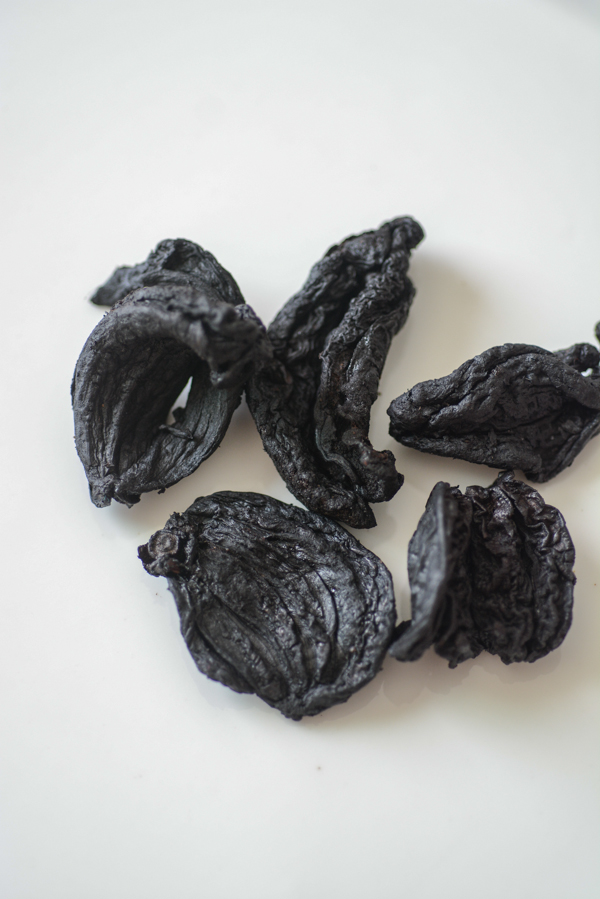
| Premium | Jet-black, well-smoked rind ("meen puli") | Glossy, deep black-brown, thoroughly dry and clearly smoky-smelling, in firm leathery pieces. The hallmark of proper sun-drying plus weeks of wood-smoke curing — the grade you want for an authentic Kerala fish curry. |
| Standard | Sun-dried / lightly cured | Dried but with little or no smoke-curing — paler, more reddish-brown, less aromatic and shorter-keeping. Still sours a curry, but without the signature smoky depth. |
| Inferior | Under-cured / damp | Pale, reddish or unevenly dried pieces that haven't been cured properly; prone to mould, weaker in flavour and poor keepers. Pale or reddish-brown colour is the warning sign. |
| Not true kudampuli | Kokum (Garcinia indica) sold as substitute | A genuine and excellent souring spice in its own right — used in Konkani and Goan cooking — but a different species with thinner, purple-red rind and a softer, fruitier sourness. Worth knowing it is not the same as Kerala's kudampuli. |
Two honest cautions when buying. First, colour tells you most of what you need: top kudampuli is dark, glossy and dry, while pale, reddish, soft or musty pieces have been poorly cured. Second, names overlap loosely in the market — "Garcinia cambogia," "Malabar tamarind," "brindleberry," kokum and even unrelated souring fruits can get muddled. We grade for true Garcinia gummi-gutta rind, properly smoke-cured, and we keep kokum clearly labelled as the separate spice it is.
11Flavour & chemistry
What gives it that aroma
Kudampuli is, above all, sour — but it's a particular kind of sour. Where tamarind is sweet-and-sour and lime is sharp and bright, kudampuli is deep, clean and savoury, with a rounded acidity and a smoky, almost fermented note that settles into the background of a dish rather than sitting on top of it. It adds tang without sweetness and without the slight muddiness tamarind can bring.
The sourness comes chiefly from hydroxycitric acid (HCA), an organic acid concentrated in the rind. Published figures put the fruit at roughly 10–30% HCA by weight, with concentrated commercial extracts standardised far higher. HCA is a close relative of the citric acid in citrus, which is why the rind reads as cleanly acidic. It's also the exact compound the supplement industry extracts and concentrates — the difference being dose and form, not identity.
Layered over the acid is the smoke. Weeks of curing over a wood fire deposit aromatic phenols into the rind, giving kudampuli its unmistakable smoky, woody, slightly tarry depth — the part that makes a Kerala fish curry smell like a Kerala fish curry. The better the cure, the deeper that note.
Because the flavour is concentrated and the rind is tough, kudampuli is used in very small amounts and almost always soaked or simmered so the acid leaches into the liquid. Two or three small pieces will sour a whole pot. Used with a heavy hand it can turn a dish harshly sour and faintly bitter, so restraint is the rule.
12Culinary uses
How to cook with it
Kudampuli is a back-of-the-pot workhorse: it goes in to sour and round out a dish, infuses as the curry simmers, and is usually lifted out (or left to one side) before eating. It pairs naturally with oily fish, coconut and chilli, and is most at home in the fish curries of Kerala and coastal Karnataka. A quick rinse and a short soak in warm water wakes it up; both the softened rind and its soaking water go into the pot.
- Kerala fish curry (meen curry): This is kudampuli's signature role. In the classic red Kerala fish curry — especially with sardine (mathi), seer (neymeen) or kingfish — a few pieces simmered into the chilli-and-coconut gravy give the deep, smoky sourness that defines the dish. Cooks say it also helps the curry keep, and many believe it tastes even better the next day.
- Mangalorean & Tulu coastal cooking: Across the Karnataka coast the same rind sours dishes like meen gassi (fish curry), and related Garcinia is used in mixed-vegetable and seafood preparations — the coastal seafood belt's preferred souring agent.
- Sri Lankan goraka dishes: As goraka, the cured rind sours and helps preserve Sri Lankan seafood, most famously fish ambul thiyal, a dark, dry, intensely sour fish dish prized for keeping well at room temperature in the tropical heat.
- Souring agent in place of tamarind: Anywhere a South Indian recipe wants clean tartness rather than sweet-sour tamarind, kudampuli can step in — particularly in seafood, where its savoury, smoky edge suits fish far better than tamarind's fruitiness.
- Thai kaeng som: Beyond India, the rind is an essential souring ingredient in the southern Thai sour curry kaeng som, showing how the same fruit anchors sour-fish cooking right across South and Southeast Asia.
- Vegetable & lentil dishes: Used sparingly, kudampuli lends its tang to coconut-based vegetable curries and some lentil preparations, where it brightens richness without the sweetness of tamarind.
Kudampuli was made for oily, full-flavoured fish — sardine, mackerel, seer, kingfish — and for the coconut, chilli, curry leaf, ginger, garlic, shallot, turmeric and fenugreek of South Indian coastal cooking. It loves coconut oil and coconut milk, stands up to plenty of heat, and gives savoury dishes the sour backbone they need. Think of it as the souring partner to tamarind and kokum: reach for kudampuli when you want clean, smoky tartness with fish, tamarind when you want sweet-sour body, and kokum for a fruitier, lighter sourness.
13Consumption & dosage
How much, how often
Kudampuli is a souring spice used in tiny amounts and almost always fished out before eating; it is cooked with, not eaten. The patterns below reflect how South Indian and Sri Lankan kitchens actually use it.
- Everyday amount & form: Two or three small pieces of cured rind sour a whole pot of curry. Rinse off grit, soak in a little warm water for 10-20 minutes, then add both the softened rind and its dark soaking water to the simmering dish.
- Kerala fish curry (meen curry): Its signature use: simmered into the chilli-and-coconut gravy of fish curries (sardine, seer, kingfish), giving the deep smoky sourness that defines the dish; many cooks find such curries keep and taste better the next day.
- Coastal Karnataka & Sri Lankan use: Used in Mangalorean/Tulu fish curries (meen gassi) and, as goraka, in Sri Lankan dishes like the long-keeping fish ambul thiyal.
- As a tamarind alternative: Stands in for tamarind where a clean, smoky tartness suits the dish better than sweet-sour fruitiness, particularly with seafood and in some coconut-based vegetable and lentil curries.
- Who should go easy: Use a light hand generally, since too much turns a dish harshly sour and faintly bitter. Anyone with liver concerns, on regular medication, or who is pregnant or nursing may wish to be especially cautious about concentrated Garcinia products (a different matter from a few rinds in a curry) and to check with a healthcare professional.
14Health & wellness
What the evidence says
The strongest themes in the research are below. Many studies use concentrated extracts, and the evidence is still developing.
- A traditional digestive and culinary souring agent: In Ayurveda and folk practice the rind has long been used to aid digestion and as a souring, appetite-stimulating addition to food. As a culinary spice used in small amounts, this traditional role is well attested; it is a flavouring, not a treatment.
- Source of hydroxycitric acid (HCA): The rind is one of the richest natural sources of HCA, which inhibits the enzyme ATP-citrate lyase (involved in fatty-acid synthesis) and, in animal studies, has been linked to raised serotonin and reduced appetite. This is the biochemistry behind the supplement claims — but a mechanism in a lab is not the same as a benefit in people.
- Weight loss: the evidence is weak and mixed: This is where honesty matters most. Despite enormous marketing, controlled human trials of Garcinia/HCA show, at best, only a small effect on weight: a 2011 meta-analysis (Onakpoya et al.) found a difference of about 0.88 kg versus placebo, of borderline significance and no longer significant when only rigorous trials were pooled. Bodies such as Memorial Sloan Kettering report no significant effect over placebo. There is no good evidence that Garcinia supplements produce meaningful, lasting weight loss.
- Concentrated supplements have been linked to liver injury: Far more important than any benefit is a real safety signal: concentrated Garcinia cambogia / HCA supplements have been associated with cases of clinically significant acute liver injury, some severe enough to require a liver transplant or prove fatal. The Hydroxycut products were recalled in the US in 2009 after 23 liver-injury reports including a death, the NIH LiverTox resource documents multiple Garcinia-linked cases, and a 2025 Pharmaceutical Biology review tallied over 200 reported adverse liver events. This concerns concentrated daily supplements — not the small culinary amounts of rind used to sour a curry.
- Antioxidant and other lab activity: Extracts of the rind show antioxidant and other bioactivities in laboratory and animal studies. These findings are preliminary and don't translate into proven health benefits from eating the spice.
15Nutrition
By the numbers
Kudampuli is a souring spice used in tiny amounts and largely strained out, so it is not eaten for nutrition — and there is no standard USDA FoodData Central entry for Garcinia gummi-gutta rind itself. To give an honest, sourced picture rather than invented numbers, the figures below are indicative analyses of the dried Malabar tamarind fruit and rind reported in published research (notably the rind's high hydroxycitric acid content); they vary by sample and curing, so treat them as approximate, not as a USDA per-100 g standard.
| Nutrient | Per 100 g |
|---|---|
| Hydroxycitric acid (HCA), dried fruit/rind | ~10–30% by weight (published range) |
| Moisture (cured rind) | ~10–18% (low after curing) |
| Tannins (rind) | ~1–2% |
| Pectin (rind) | ~1% |
| Fat (rind) | ~1–2% |
| Protein (rind) | ~1% |
| Total sugars (rind) | ~4% |
| Carbohydrate (fruit, approx. per 100 g) | ~18 g |
| Dietary fibre (fruit, approx. per 100 g) | ~1.7 g |
| Protein (fruit, approx. per 100 g) | ~0.5 g |
| Fat (fruit, approx. per 100 g) | ~0.2 g |
Values are approximate and vary by sample; source: USDA FoodData Central.
16Myths vs facts
Setting the record straight
Myth: Kudampuli and the 'Garcinia cambogia' diet pill come from completely different plants.
Fact: They come from the same plant - Garcinia cambogia is just an old scientific name for Garcinia gummi-gutta. What differs is dose and form: a couple of cured rinds in a curry are a traditional food, while concentrated daily HCA capsules are a different, riskier proposition.
Myth: Eating kudampuli in curries will help you lose weight.
Fact: There is no good evidence for this. Controlled human trials of Garcinia/HCA suggest at best a tiny effect (a 2011 meta-analysis reported about 0.88 kg more weight loss than placebo, of borderline statistical significance). Cooking with kudampuli is about flavour, not weight loss.
Myth: Kudampuli is the same thing as kokum.
Fact: They are different species in the same family. Kudampuli (G. gummi-gutta) has a thick rind cured dark with a smoky, deep sour; kokum (G. indica) has a thinner purple-red rind with a fruitier, lighter sour and is used more in Konkani and Goan cooking.
Myth: Any souring fruit rind sold as 'Malabar tamarind' or 'brindleberry' is genuine kudampuli.
Fact: Market names overlap loosely, so kokum and unrelated souring fruits sometimes get muddled in. True kudampuli is well-cured Garcinia gummi-gutta rind - dark, glossy, dry and smoky; pale, reddish, soft pieces are poorly cured or another fruit.
Myth: You can grow a reliable fruiting orchard just by planting kudampuli seeds.
Fact: The tree is dioecious, so many seedlings turn out to be non-fruiting males, and seed-raised trees are slow to bear (7-10 years). Grafted female selections fruit earlier (about 4-5 years) and ensure fruiting plants.
Myth: The whole kudampuli fruit is what you cook with.
Fact: Only the rind is used. The pulp and seeds are removed and discarded; the rind alone is sliced, sun-dried and smoke-cured into the dark leathery spice. The fresh whole fruit is rarely eaten.
17In your kitchen
How to choose, use & store
Choose
Buy on colour and smell. Top kudampuli is dark — deep brown to jet-black — glossy, thoroughly dry and noticeably smoky when you sniff it, in firm, leathery, sticky-when-fresh pieces. Pale, reddish-brown, soft, damp or musty pieces have been poorly or under-cured and will be weaker and shorter-lived. Make sure you're getting true Garcinia gummi-gutta (kudampuli) and not kokum or an unrelated souring fruit sold under the same loose names — and ignore weight-loss marketing on the label; you're buying a cooking spice, not a supplement.
Use
Use a light hand: two or three small pieces are usually enough to sour a whole pot of curry. Rinse the rind to remove grit, then soak it in a little warm water for 10–20 minutes to soften; add both the softened pieces and their dark soaking water to the simmering curry, and let it cook in so the sourness infuses. Taste as you go — kudampuli builds, and too much turns a dish harshly sour and faintly bitter. Lift the pieces out before serving, or warn your guests not to bite into them. It suits oily fish, coconut and chilli best.
Store
Cured kudampuli keeps very well — that's the whole point of the smoke. Store it in a clean, airtight jar away from heat, light and moisture, and it will hold for a year or more; a cool, dry shelf is ideal, and the fridge helps in very humid weather. Keep it dry above all, since damp invites mould on the leathery rind. If the smoky aroma fades or the pieces soften and smell musty, it's past its best.
18FAQ
Frequently asked questions
What exactly is kudampuli?
It's a souring spice: the dried, smoke-cured rind of the fruit of Garcinia gummi-gutta, a tree native to the Western Ghats. The fruit looks like a small green-to-yellow pumpkin, but only the thick rind is used — sliced, sun-dried and cured over wood-smoke until it turns dark, leathery and smoky. You cook with it to sour a dish and usually lift it out before eating.
Is kudampuli the same as "Garcinia cambogia"?
Yes — it's the same plant. Garcinia cambogia is an old (now superseded) scientific name for Garcinia gummi-gutta, and it's the name the weight-loss supplement industry adopted. But the curry souring rind and the concentrated diet capsule are very different in dose and form. We treat kudampuli as the cooking spice it has always been, not as a supplement.
Is kudampuli really native to the Western Ghats?
Yes, genuinely. Garcinia gummi-gutta is native to the central and southern Western Ghats of southwest India (and related populations grow in parts of Southeast Asia and Sri Lanka). For us this is a rare "born here" spice — it grew in these forests long before it was ever written about, which is why it's so woven into Kerala's kitchens.
How is kudampuli different from tamarind and kokum?
All three are souring agents, but they're distinct. Tamarind is sweet-and-sour with body; kudampuli is deeper, cleaner and smoky, without sweetness, and is the classic souring agent for Kerala fish curry. Kokum (Garcinia indica) is a different species in the same family — thinner purple-red rind, a fruitier, lighter sour — used more in Konkani and Goan cooking.
How do I use kudampuli in cooking?
Use very little — two or three small pieces sour a whole pot. Rinse off any grit, soak the rind in a little warm water for 10–20 minutes to soften, then add both the pieces and their dark soaking water to the simmering curry so the sourness cooks in. Taste as you go, and fish the pieces out before serving (or warn people not to bite them).
Why is kudampuli used in fish curry specifically?
Its clean, savoury, smoky sourness suits oily fish like sardine, mackerel and seer far better than sweet tamarind, and it stands up to coconut and chilli. Cooks across Kerala also say it helps the curry keep and tastes even better the next day — one reason it's so firmly the souring agent of choice in coastal seafood cooking.
Does kudampuli help with weight loss?
There's no good evidence that it does. Its hydroxycitric acid (HCA) is the basis of "Garcinia cambogia" diet pills, but controlled human trials show at best a tiny effect — about 0.88 kg versus placebo in a 2011 meta-analysis, of borderline significance — and major reviews find no significant benefit over placebo. Cooking with kudampuli is about flavour, not weight loss.
Are Garcinia cambogia supplements safe?
Concentrated Garcinia cambogia / HCA weight-loss supplements carry a real safety concern: they've been linked in published case reports to serious liver injury, some requiring a transplant or proving fatal, and the Hydroxycut products were recalled in the US in 2009 after 23 liver-injury reports including a death. This is about high-dose daily supplements — not the small culinary amounts of rind used to sour a curry. We don't sell or recommend such supplements.
So is it safe to cook with kudampuli?
Culinary kudampuli — a few pieces used to sour a dish and then mostly removed — is a traditional food eaten safely for generations across South India and Sri Lanka. The liver-injury concern relates to concentrated supplements taken daily, not to a couple of rinds in a curry. If you have liver problems, take antidepressants, or are pregnant or nursing, it's sensible to talk to a healthcare professional about any concentrated Garcinia product.
What gives kudampuli its flavour?
Two things. The sourness comes from hydroxycitric acid (HCA), an organic acid that makes up a large share of the dried rind (published figures put the fruit at roughly 10–30% HCA by weight). The smoky, woody depth comes from the curing — weeks over a wood fire deposit aromatic smoke compounds into the rind. Together they create that distinctive clean, deep, smoky tartness.
How do I pick good kudampuli?
Go by colour and smell. The best rind is dark — deep brown to jet-black — glossy, thoroughly dry and clearly smoky-smelling. Pale, reddish-brown, soft or musty pieces have been poorly cured and will be weaker and won't keep. Also check you're buying true Garcinia gummi-gutta and not kokum or another fruit sold under overlapping names.
How should I store it, and how long does it last?
Keep it in an airtight jar away from heat, light and especially moisture; the smoke-curing makes it a good keeper, so it'll hold for a year or more. In very humid weather the fridge helps. If the smoky smell fades or the pieces turn soft and musty, it's past its best.
What's the difference between the fruit and the spice?
The whole fruit — pulp, seeds and rind — is rarely eaten; it's quite sour and astringent fresh. The spice is only the rind, after the pulp and seeds are removed and the rind is dried and smoke-cured. That cured rind is what's sold as kudampuli, kodampuli, Malabar tamarind or fish tamarind.
How long after planting will a kudampuli tree start fruiting?
It depends on the planting material. Ordinary seedling trees are slow and typically take 7-10 years, while grafted female selections can begin in roughly 4-5 years and some early-bearing selections a little sooner. Once bearing, the trees are very long-lived and stay productive for many decades.
Why do some kudampuli trees never produce fruit?
Because the species is dioecious - it has separate male and female trees, and only females set fruit. If you raise an orchard purely from seed, a share of the plants will be non-fruiting males. Planting grafted female selections avoids this and gives assured, earlier bearing.
Can I cure kudampuli rind at home, and why is the smoking important?
Yes. Halve the ripe fruit, remove the pulp and seeds, slice the rind and sun-dry it, then cure it for weeks over a wood-fire hearth. The slow smoking drives off moisture (so it keeps for a year or more without mould) and deposits the aromatic smoke compounds that give true kudampuli its signature dark colour and smoky sourness.
Sources & further reading
- Garcinia gummi-gutta — Wikipedia (accepted name, synonyms, family, native Western Ghats range, tree and fruit description, 20 m height, 1,800 m elevation, kaeng som, goraka, common names) en.wikipedia.org
- Garcinia gummi-gutta (L.) N.Robson — GBIF (accepted name and taxonomy) gbif.org
- Garcinia gummi-gutta (L.) N.Robson — Plants of the World Online, Kew (accepted name, synonyms, distribution) powo.science.kew.org
- Garcinia gummi-gutta — Memorial Sloan Kettering Cancer Center, Integrative Medicine (HCA, ATP-citrate lyase mechanism, no significant weight-loss effect over placebo, hepatotoxicity, SSRI/antidepressant interaction) mskcc.org
- Garcinia Cambogia — LiverTox, NCBI Bookshelf (10–30% HCA by weight, ATP-citrate lyase mechanism, documented liver-injury cases, transplant/fatal outcomes, Hydroxycut) ncbi.nlm.nih.gov
- The Use of Garcinia Extract (Hydroxycitric Acid) as a Weight-loss Supplement: A Systematic Review and Meta-Analysis of RCTs — Onakpoya et al., 2011, PMC3010674 (~0.88 kg effect, borderline significance, methodological weaknesses) pmc.ncbi.nlm.nih.gov
- FDA recalls Hydroxycut supplements after reports of liver damage (2009) — Consumer Reports (23 reports, death of a 19-year-old, recall) consumerreports.org
- Dangerous dietary supplements: Garcinia cambogia-associated hepatic failure requiring transplantation — PMC5143754 pmc.ncbi.nlm.nih.gov
- Garcinia gummi-gutta: Phytochemicals and pharmacological applications — PubMed 36785888 (souring/flavouring use in Kerala and Karnataka fish curry; phytochemistry) pubmed.ncbi.nlm.nih.gov
- Hepatotoxicity of dietary supplements containing Garcinia gummi-gutta (L.) N. Robson — Pharmaceutical Biology, 2025, PMC12636546 (review of >200 reported liver-injury adverse events, 34 case reports, one death, nine transplants) ncbi.nlm.nih.gov
- Regional Station Thrissur — ICAR–NBPGR (Malabar tamarind germplasm conservation; early-bearing Garcinia gummi-gutta accessions IC244100-2 and IC244111-1, INGR 04061/04062) nbpgr.org.in
- Diversity of Malabar Tamarind (Garcinia gummi-gutta) — JNTBGRI (Western Ghats distribution, fruit weight, rind thickness, accessions/conservation) jntbgri.res.in
Last reviewed: 23 June 2026 · Written by the AroWest editorial team (Western Crest Ventures LLP). Educational content, not medical advice.